The Volume Reality: Why You Have 3x More Mulch Than You Expected
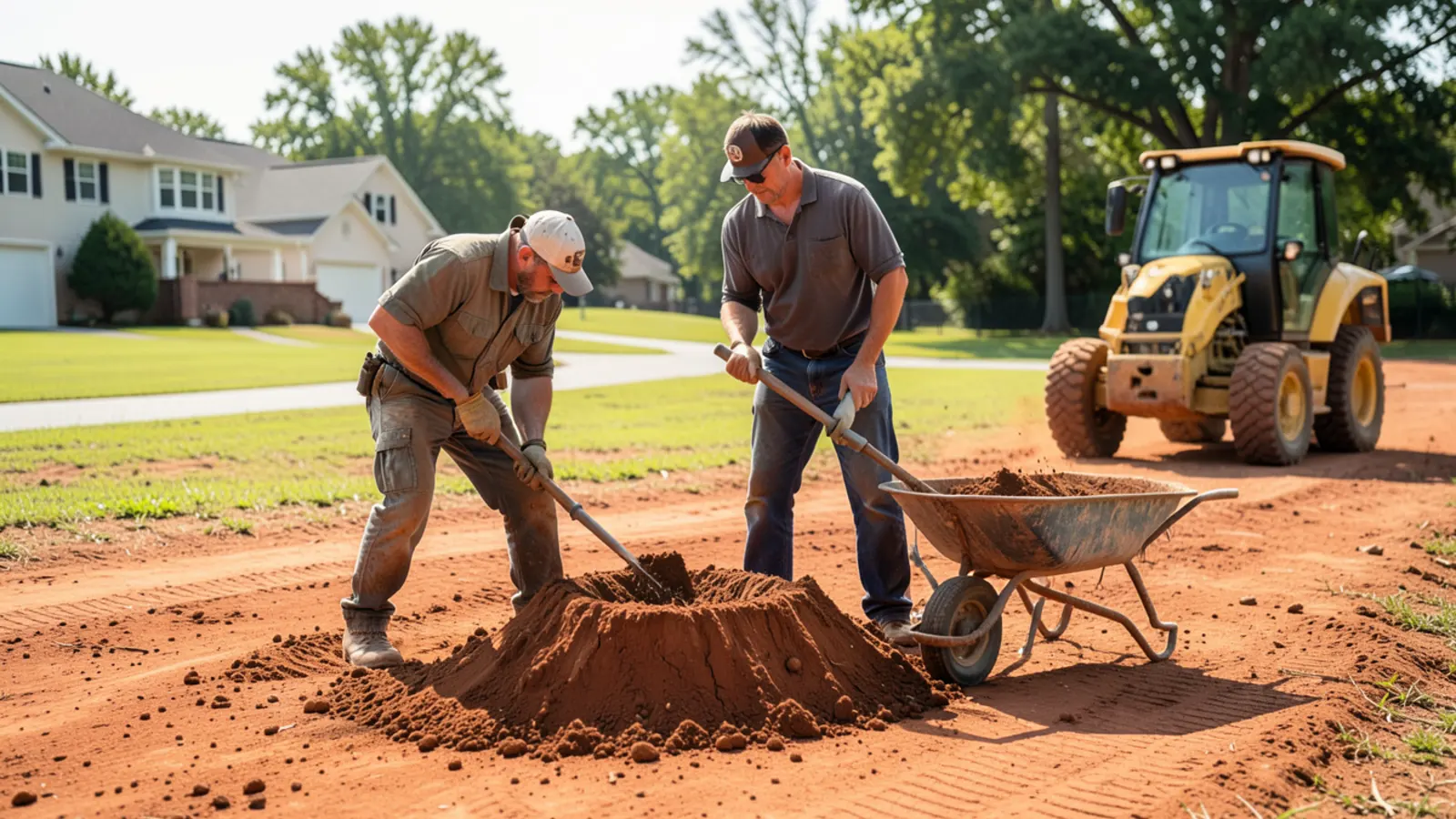
When solid hardwood or pine is mechanically pulverized by high-speed carbide cutting teeth, air is incorporated into the wood fibers, and the resulting chips expand in volume by approximately 250% to 300%. A standard 30-inch oak stump generates between four and six wheelbarrows of raw wood shavings mixed with pulverized red clay.
Homeowners are often surprised by the size of the mulch mound left behind. You have two primary options: (1) Leave the mulch in a crowned mound directly over the grinding hole to allow for natural decomposition and soil settling; or (2) Shovel out the bulk of the fresh chips to use as weed-suppressing mulch across your ornamental shrub beds, backfilling the hole with clean structural topsoil.
Soil Amendment Matrix: Treating Cecil Clay Loam After Below-Grade Grinding
North Georgia piedmont soil (predominantly the Cecil soil series) has a dense, plate-like clay mineral structure that binds tightly together. When mixed with woody debris and compacted by foot traffic or rainfall, it requires deliberate soil chemistry remediation to support vigorous new turfgrass.
| Soil Amendment | Target Soil Problem | Recommended Application Rate | Optimal Application Timing |
|---|
| Agricultural Gypsum (CaSO4) | Breaks up compacted clay platelets without changing pH | 5 to 10 lbs per 50 sq ft | Immediately after backfilling crater |
| Dolomitic Limestone | Neutralizes natural subsoil acidity (raises pH to 6.2–6.5) | 4 to 6 lbs per 50 sq ft | 2 weeks prior to seeding or sodding |
| High-Nitrogen Starter Fertilizer (10-10-10) | Replaces inorganic nitrogen consumed by wood decay microbes | 1 to 2 lbs per 50 sq ft | Day of turf seeding or sod placement |
| Screened Loam / Compost Blend | Provides organic matter and restores level grade | 2 to 4 bags (as needed for 2" crown) | During final structural backfill phase |
The Nitrogen Robbery: Why Fresh Wood Chips Starve Your Lawn and Plants
One of the most common gardening mistakes in north Georgia is raking fresh stump grindings flat and immediately scattering grass seed or laying fresh sod directly on top. Wood is composed primarily of carbon and cellulose. In order to break down this carbon, soil bacteria and fungi require large quantities of nitrogen.
When fresh wood shavings are mixed into soil, soil microbes rapidly consume all available nitrogen from the surrounding rhizosphere, effectively starving grass seedlings or young garden plants. This phenomenon—known as "nitrogen tie-up" or nitrogen depletion—causes new lawn grass to turn pale yellow, develop weak root systems, and die within weeks. To establish healthy turf, you must shovel out the top 4 to 6 inches of wood shavings, add a nitrogen-rich starter fertilizer (like 10-10-10 or organic blood meal), and backfill with screened, compost-amended topsoil before laying sod.
Preventing the Post-Grinding "Sinkhole" in Compacted Georgia Red Clay
Georgia red clay expands when wet and shrinks when dry. When an excavation cavity or deep grinding crater is filled loosely with wood chips and soil, natural settling is inevitable. Over the first six to twelve months, rainwater percolates through the porous shavings, compacting the loose material down into the void left by the pulverized taproot. If the hole was raked perfectly level on day one, it will inevitably transform into a concave sinkhole two to four inches deep by next spring.
To prevent a dangerous, mower-jolting depression, follow this structural protocol:
1. Shovel out the fluffy excess mulch down to four inches below the surrounding grade.
2. Tamp the subsoil firmly using a hand tamper or the back of a flat shovel.
3. Add clean structural fill dirt in two-inch lifts, tamping each lift firmly.
4. Crown the final layer of topsoil one to two inches higher than the surrounding lawn. Over the next three to six months, natural rainfall will settle the crowned dirt flush with your lawn.
Managing Saprophytic Fungi, Slime Molds & Termite Deterrence in Subsoil Pits
In north Georgia’s warm, humid climate, moist subterranean wood fibers create an active microbiological ecosystem. Within weeks of stump grinding, homeowners often notice sudden flushes of mushrooms, puffballs, or even bright yellow "dog vomit" slime mold (Fuligo septica) appearing across the ground.
These fungi are saprophytes—beneficial organisms that feed exclusively on dead cellulose and break wood down into rich humus. They do not harm your living lawn grass or ornamentals and will naturally disappear once their food supply diminishes. However, leaving large quantities of decomposing wood uncompacted within 15 feet of your home’s foundation creates prime foraging territory for eastern subterranean termites (Reticulitermes flavipes). Compacting the backfill, dressing with clean topsoil, and ensuring rainwater drains away from the treated area prevents chronic subterranean moisture that attracts termite colonies.
Gypsum, Lime and Core Aeration: Unlocking Dense Georgia Red Clay
Heavy Piedmont red clay (Cecil soil series) is characterized by ultra-fine clay platelets that bond tightly together, especially when compacted by heavy tree removal trucks. Once the stump has been ground and backfilled, the soil surrounding the excavation perimeter is frequently depleted and compacted. To ensure new grass or companion shrubs flourish, soil chemistry amendments are essential.
First, apply agricultural gypsum (calcium sulfate) across the backfilled area and adjacent turf. Gypsum acts as a clay buster, causing fine clay platelets to aggregate into larger crumbs, improving water drainage and root penetration without altering soil pH. Second, test soil pH; north Georgia soils are naturally acidic (often pH 5.0 to 5.5). Applying dolomitic limestone raises the pH to the optimal 6.0 to 6.5 range required for vigorous Fescue or Bermuda grass growth. Finally, core-aerate the adjacent lawn in spring or early fall to relieve soil compaction and stimulate healthy root expansion.
Can You Plant a New Tree in the Exact Same Spot?
Homeowners frequently wish to plant a new ornamental shade tree directly where the old tree stood. If the old stump was simply ground 4 to 6 inches below the grass, planting directly in that spot is unadvisable. The dense subterranean root plate remains inches below the surface, blocking new root growth, while microbial decomposition starves the young tree of vital nutrients.
If you must plant in the same location, you must either order deep surgical root extraction down 18+ inches, or shift your new planting location three to five feet away into virgin soil. Shifting slightly into native soil allows the young specimen tree to establish roots quickly in healthy soil while the old root system breaks down naturally nearby.
Summary Checklist for Post-Stump Grinding Yard Restoration
To ensure your lawn recovers flawlessly without hollows or weeds, follow this structured six-step restoration protocol:
1. Shovel and Relocate Wood Shavings (Days 1–3): Remove approximately 70% of the fluffy chips and spread them as an insulating 2-inch mulch layer around established trees, shrub beds, or walking paths.
2. Subsoil Compaction & Soil Amendments (Day 4): Tamp down the base of the excavation pit firmly. Broadcast 5 pounds of agricultural gypsum and 3 pounds of dolomitic limestone across the hole to condition native Cecil clay.
3. Crowned Topsoil Backfill (Day 5): Fill the void using a 50/50 mix of screened sandy loam and composted organic matter. Crown the center 2 inches higher than the surrounding sod line to offset future settling.
4. Nutrient Replenishment (Day 7): Apply a balanced 10-10-10 starter fertilizer to replenish inorganic nitrogen drawn away by wood decay bacteria.
5. Turf Selection and Establishment (Week 2): For warm-season lawns (Bermuda or Zoysia), install fresh sod squares during late spring or summer, rolling them flat with a water-filled lawn roller. For cool-season Tall Fescue, aerate and broadcast seed during early autumn (September–October), covering lightly with clean wheat straw.
6. Moisture Management (Weeks 2–5): Water the new turf daily for the first two weeks, transitioning to deep, infrequent irrigation once roots anchor into the clay substrate. For expert stump grinding and root clearing, call On The Grind at (321) 677-9055.